

Cello & Double Bass Courses | Learn Cello
Parkland Music offers professional cello and double bass courses taught by renowned cello instructors, perfect for anyone interested in learning the cello or double bass.
Cello & Double Bass Course Overview
These two videos present the most deeply moving musical charm of the low-frequency string family (Cello & Double Bass)!
Video 1 (Cello): Features classic performance footage by legendary cellist Yo-Yo Ma, bringing you face-to-face with the cello’s uniquely rich and profound tone—from warm, full-bodied low notes and deeply moving human-like mid-tones to highly penetrating and expressive high registers, demonstrating the cello’s unparalleled artistry and emotional depth.
Video 2 (Double Bass): Highlights a brilliant Double Bass performance showcase, inviting you to experience the lowest-pitched and most grandly resonant instrument in the string family! The double bass is not only the indispensable rhythmic and harmonic soul of orchestral ensembles, jazz bands, and modern pop music, but its thunderous low-frequency resonance also delivers exceptional solo and pizzicato expressiveness.
Parkland Music is dedicated to providing comprehensive, professional Cello and Double Bass courses, covering classical strings, jazz walking bass, pop accompaniment, music theory, sight-reading, ear training, and international exam preparation (such as ABRSM and Trinity). Whether for early childhood music enlightenment, adult stress relief, or advanced performance techniques, our star tutor team tailors personalized study plans to help you master correct posture, bowing, and tone production step-by-step. Watch the videos now and experience the extraordinary power of low-string music!
Cello & Double Bass Course Curriculum | Syllabus, Sight-Reading, Music Theory, and Classical/Pop Repertoire Training
- This course is systematically designed for students aspiring to learn the Cello or Double Bass. It comprehensively covers bow-holding, tone production, bilateral hand coordination, sight-reading, music theory, classical and pop repertoire interpretation, and instrument maintenance, while placing key emphasis on advanced performance techniques, style analysis, and emotional expression.
- 1. Low-Register String Fundamentals & Beginner Training
- Instrument Anatomy & Posture: Detailed breakdown of the cello/double bass structure (body, bridge, endpin, and bow mechanics), instrument care, and correct sitting/standing postures, paired with relaxed wrists and arms to build a solid foundation for rich, deep tone production.
- Left-Hand Position & Finger Independence Training: Focus on left-hand frame setup, finger independence, and pressing force to master precise intonation, fluid scales, and arpeggio fingerings in low registers.
- Bowing Technique & Dynamic Control: Master cello bow holds or double bass bow holds (German and French bow techniques), whole bow, détaché, legato, and staccato. Gain precise control over volume dynamics, bowing speed, and bow pressure for tonal layering.
- Fundamental Intonation & Ear Development: Utilize open-string exercises and first-position practice to establish acute low-frequency pitch perception and harmonic awareness.
- 2. Classical Repertoire & Multi-Genre Styles
- Repertoire & Exam Preparation: Practical instruction featuring masterworks by Bach, Saint-Saëns, Fauré, Elgar, and Haydn (e.g., Bach Cello Suites, The Swan), alongside ABRSM and Trinity grade exam and diploma syllabi. Pop music and film soundtracks are also supported.
- Music Theory & Sight-Reading: Boost sight-reading speed across Bass Clef, Tenor Clef, and Treble Clef, mastering note values and various musical expression marking
- Score Analysis & Bassline Construction: In-depth analysis of musical structure, harmonic frameworks, bassline arrangement logic, and key modulations.
- Classical & Crossover Style Interpretation: Explore bowing nuances across Baroque, Classical, and Romantic eras, while incorporating crossover performance styles including Jazz, Blues, Walking Bass, and pop accompaniment (specially tailored for Double Bass students).
- 3. Advanced Performance Techniques & Artistry
- Advanced Technique Mastery: In-depth training on shifting, thumb position, vibrato, spiccato, double stops, harmonics, pizzicato, and slap techniques, focusing on effort-efficient execution.
- Ear Training & Pitch Perception: Enhance low-frequency pitch discrimination and micro-tuning skills to increase sensitivity to subtle timbre variations and ensemble dynamics in chamber or orchestral settings.
- Musical Phrasing & Expressive Interpretation: Learn phrasing, bow distribution, rubato application, and musical vocabulary to transform deep, resonant technical skills into captivating stage performances.
- 4. Instrument Maintenance & Efficient Practice
- Instrument Knowledge & Care: Introduction to buying guidelines for cellos and double basses, rosin selection and application, re-stringing, endpin maintenance, humidity/temperature control, and wood preservation.
- Scientific Practice Strategies: Adopt systematic practice routines including slow practice, slow-bow intonation audits, section breakdowns, and metronome work to maximize practice efficiency.
Who Is Suitable for Our Cello & Double Bass Courses?
Whether you have zero experience reading sheet music or are deeply captivated by the cello’s warm, human-like voice or the double bass’s thunderous low-end resonance, our professional tutors will tailor a personalized learning pace for you. From correct sitting/standing posture, relaxed posture, and bow-holding tone production to reading the bass clef, we guide you step-by-step for a smooth, enjoyable journey toward playing your very first moving melody.
If you already possess a string foundation and wish to achieve breakthroughs in position shifting, thumb position, vibrato, advanced bowing techniques (such as spiccato or ricochet), walking basslines, or pizzicato / slap techniques, our tutors will refine your tonal nuances, musical expression, and style analysis—fully supporting you to excel in international diploma exams or stand out in ensemble and band settings.
The cello and double bass (available in fractional sizes tailored for children, such as 1/10, 1/8, and 1/4) serve as exceptional instruments for early musical development. Learning low-register strings effectively trains fine motor coordination, pitch perception, and concentration in children. Tutors utilize engaging and patient teaching methods, combining nursery rhymes and classical pieces to cultivate confidence and solid musical fundamentals in a stress-free environment.
The deep, calming frequencies of low-register strings possess wonderful therapeutic qualities, offering an effective escape from daily work and academic pressures. We provide highly flexible scheduling and make-up lesson policies, allowing students to freely select classical masterpieces, pop arrangements, or film soundtracks (such as The Swan, Jaws Theme, or anime soundtracks) as learning material to enjoy music at their own pace.
Cello & Double Bass Learning Guide: From Zero Foundation, Exam Planning, to Efficient Practice Tips
How long before beginners can take grade exams? How much time is needed to progress from beginner to Grade 8?
Parkland Music adheres to an “Interest-Driven Learning” philosophy. We believe music should stem from passion, so taking exams is never mandatory. Whether you simply wish to enjoy playing, perform your favorite low-register melodies, or test your progress through international grade exams, your tutor will respect your choice and tailor a dedicated plan for you.
If you aim for grade exams, the following timeline serves as a reference:
Beginner Grades (Grade 1–3): Beginners typically achieve basic bow-holding, tone production, pressing intonation, and bass clef sight-reading skills after about 1 to 2 years of systematic training and regular practice, allowing them to comfortably enter ABRSM (Royal Schools of Music) or Trinity College London examinations for Cello or Double Bass. In fact, many Parkland Music students successfully challenge and pass beginner grade exams within their first year—a completely realistic goal when following your tutor’s guidance!
From Beginner to Grade 8: With consistent practice and professional guidance, average students progress from zero foundation to Grade 8 performance level in about 5 to 7 years. Under Parkland Music’s systematic training, exceptional students can advance to Grade 8 even faster! Individual progress varies based on daily practice duration, age, and musical absorption, but step-by-step scientific training ensures every student reaches their goal steadily.
How long does it take for a beginner to play a full song on Cello or Double Bass?
Lessons 1–2: Master proper sitting/standing posture, instrument hold, bow hold (Cello bow technique or Double Bass German/French bow technique), open-string tone production, and basic staff (Bass Clef) sight-reading.
Around 1 Month / 4 Lessons: Master basic first-position (First Position) fingerings, foundational scales, and beginner pieces. With daily practice, you can fluently play your first beginner piece (such as Twinkle, Twinkle Little Star, Ode to Joy, or the main motif of The Swan).
3–6 Months: Overcome bilateral coordination challenges (left-hand finger independence paired with right-hand bowing), master transitions between legato and détaché bowing, and tackle more expressive classical miniatures or pop arrangements (e.g., excerpts from Bach’s Unaccompanied Cello Suites or introductory Jazz Walking Basslines).
Practice Tips (Efficient Home Practice Secrets)
The “Short & Frequent” Principle: Practicing with focus for 15–30 minutes daily builds muscle memory, low-frequency pitch perception, and bowing stability far better than an exhaustive, once-a-week weekend cram session.
“Slow Practice” & “Slow-Bow Intonation Audits”: Because low-register string instruments span wide intervals and large finger spacings, always start complex shifting or fast passages at a very slow tempo (BPM 50–60) with a metronome. Use a slow bow to carefully listen for exact intonation on low-frequency notes, building finger muscle memory before gradually increasing the tempo.
Professional Cello & Double Bass Tutor Team | Elite Academy Background & Rich Live/Concert Experience
Parkland Music boasts a top-tier Cello and Double Bass faculty in Hong Kong. Our team members are graduates of world-renowned music institutions (such as Berklee College of Music, HKBU Department of Music, HKAPA, and the Royal Academy of Music) and hold Grade 8 or higher professional qualifications (such as ABRSM / Trinity Grade 8, DipABRSM / ATCL / LTCL performance diplomas).
Beyond extensive one-on-one teaching experience, our Cello and Double Bass tutors are active in solo recitals, string quartets, chamber music ensembles, professional symphony orchestras, jazz bands, record label soundtrack recordings, masterclasses, and major live concert stage performances. Tutors tailor every course to suit each student’s proficiency level, chosen instrument (Cello or Double Bass), musical preferences (Classical, Pop, Jazz, Film Score, Walking Bass), and learning goals—delivering the most systematic, efficient, and deeply expressive low-string curriculum.
Cello & Double Bass Course Fees | How Much Does It Cost to Learn Cello or Double Bass in Hong Kong?
2026 New Student Course Fees (Individual Lessons)
| Grade | 30-min | 45-min | 60-min |
|---|---|---|---|
| 初級(Pre-Grade) | $185 | $243 | $302 |
| 一級(Grade 1) | $194 | $252 | $311 |
| 二級(Grade 2) | $203 | $261 | $320 |
| 三級(Grade 3) | $216 | $279 | $347 |
| 四級(Grade 4) | / | $293 | $356 |
| 五級(Grade 5) | / | $311 | $383 |
| 六級(Grade 6) | / | $320 | $392 |
| 七級(Grade 7) | / | $338 | $419 |
| 八級(Grade 8) | / | $356 | $446 |
*以上價錢均為九折後之優惠價格。
Real Student Reviews | Is Parkland Music Good? Recommended Choice in Hong Kong for Cello & Double Bass
Curious about Parkland Music’s Cello and Double Bass courses? Listen to our students’ firsthand experiences and watch their solo and ensemble performance showcases! With numerous branch locations across Hong Kong, Parkland Music has earned thousands of glowing student reviews. Our star tutor team is renowned for being attentive, patient, and highly professional, tailoring each study plan to the student’s personal musical preferences (Classical masterpieces, pop string accompaniments, jazz, and movie themes) and learning pace. Whether for early childhood music enlightenment (ages 5 and up), zero-foundation beginners looking to cultivate a rewarding hobby, or candidates preparing for ABRSM / Trinity grade exams and performance diplomas, Parkland Music provides a professional, stress-free learning environment!
Patient & Expert Instruction: Clear, accessible teaching method ideal for children and absolute beginners, guiding you step-by-step from proper sitting/standing posture, instrument hold, and bowing tone production to bass clef sight-reading to build a rock-solid foundation.
Flexible Schedules & Lesson Options: Flexible make-up policies and adaptable timing options make it easy for parents, working professionals, and students to manage their music study schedules.
Balanced Focus on Practical Skills & Music Theory: Beyond solo repertoire and musical interpretation, the curriculum encompasses classical and pop music theory, ear training, sight-reading, low-register intonation precision, and style analysis.
Stage Performance & Showcase Opportunities: Regular student recitals, solo showcases, orchestral/ensemble experiences, and public performance opportunities help students cultivate stage confidence, showcase low-string charm, and gain valuable live performance experience.
A Wealth of Performance Opportunities | Student Recitals & Public Performances
At Parkland Music, we believe music extends beyond the practice room—the stage is where your progress comes to life! We offer cello and double bass students of all levels a wide range of performance opportunities to build confidence, gain solo and ensemble experience, and share the distinctive depth and richness of low strings.
Four Performance Pathways for Parkland Music Students
Regular Student Recitals: Our quarterly in-house and public recitals give beginners and advanced students a welcoming, professional setting to share their music, learn from one another and try out their exam repertoire.
Live Concerts & Major Recitals: Opportunities to perform in major concert halls, at shopping mall events and as guest soloists allow students to take to larger stages, showcasing the cello’s warm, voice-like tone and the double bass’s powerful solo sound.
Music Competitions & Exams: We guide and recommend accomplished students for local and international string competitions, such as the Hong Kong Schools Music Festival and the Hong Kong International String Competition. We also prepare students for ABRSM and Trinity cello and double bass graded exams and performance diplomas, helping them work towards musical awards and recognised qualifications.
Chamber Music & Ensemble Playing: We help students explore duets, string quartets and chamber ensembles, or join string ensembles, orchestras and jazz bands. By providing the bassline and harmonic foundation, students experience the joy of making music together and bringing depth to an ensemble’s sound.
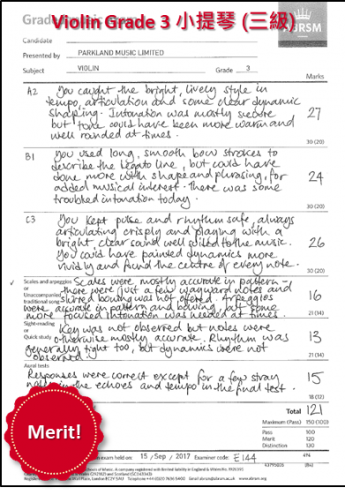
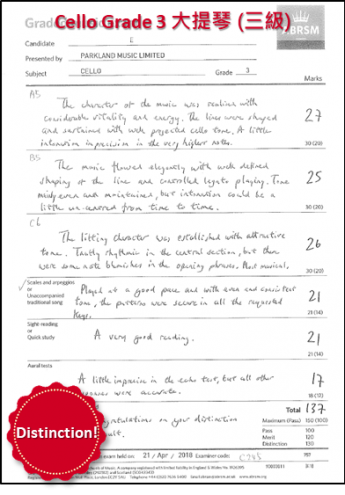
98% Exam Pass Rate | Letting Results Speak for Themselves
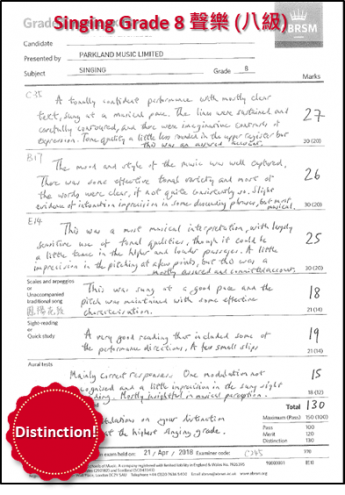
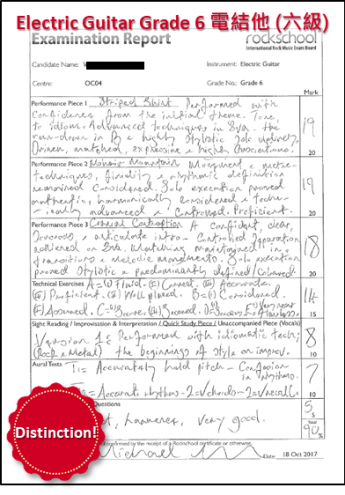
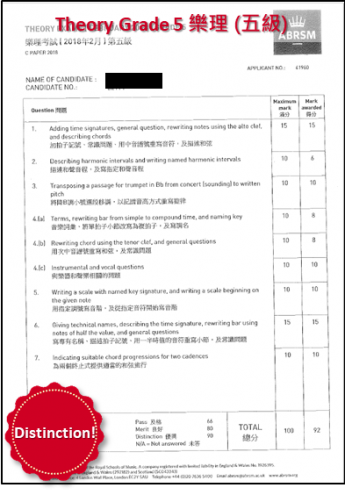
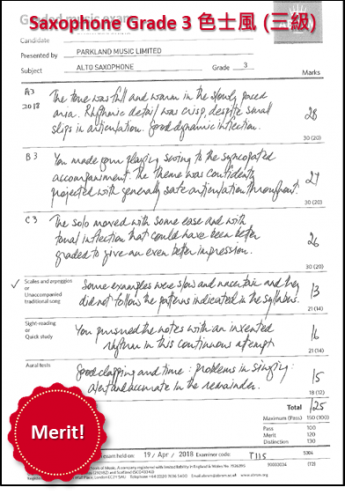
Adhering to our core philosophy of “Interest-Driven Learning,” Parkland Music is committed to providing every student with the most professional and systematic violin training. In international examinations over the years—including the ABRSM (Royal Schools of Music) and Trinity College London exams—our students have consistently demonstrated exceptional results, achieving an exam pass rate of up to 98%. In one recent ABRSM exam session, nearly 88% of our candidates passed with Merit or Distinction!
Among our students, outstanding learners at Parkland have progressed from complete zero foundation to Grade 8 level in as little as 3 years! Our tutor team adapts teaching strategies to each individual, helping every student unleash their potential, successfully attain classical violin grade qualifications and performance diplomas, and step forward with confidence on their professional musical journey.

Enquire About Cello / Double Bass Courses Now
Fill in the information below and receive a $50 cash rebate upon enrollment (Limited monthly quota available on a first-come, first-served basis, while stocks last).
Whether you are an absolute beginner, an intermediate player, or an advanced musician, our tutors will customize a dedicated curriculum tailored to your musical goals. You can even choose your favorite songs and musical styles as learning materials!
Frequently Asked Questions (FAQ) | Cello & Double Bass Courses
Yes, highly suitable.
Our courses are specially designed for students of all proficiency levels. No prior music theory, instrument experience, or sight-reading ability is required. Professional tutors will guide you from ground zero—mastering proper sitting/standing posture, relaxed arm mechanics, bow-holding tone production, and bass clef sight-reading to smoothly overcome initial hand coordination challenges.
Scheduling is exceptionally flexible.
We offer a wide range of time slots (including weekday evenings and weekends) to accommodate parents, students, and working professionals. The academy also features a flexible make-up lesson policy; if you need to take leave, you can apply for a make-up class in advance so your learning momentum remains uninterrupted.
Instruments are provided free of charge for use during lessons.
As cellos and double basses are large and difficult to transport, the Academy provides professionally maintained, full-size (4/4) cellos and double basses for students to use free of charge during lessons, saving them the effort of bringing a large instrument to every class.
To support regular practice at home and develop muscle memory, we recommend having a suitable instrument at home. If you are considering buying or renting one, your instructor will offer advice during your first lesson based on your height, build and budget.
Please note: String instruments come in a range of sizes, and we may not be able to provide instruments other than full-size (4/4) models. Students who require a different size will need to bring their own suitable instrument to lessons.
Our faculty team holds outstanding academic qualifications and rich performance experience.
Our tutors are graduates of world-renowned music academies (such as Berklee College of Music, HKBU Department of Music, HKAPA, and the Royal Academy of Music) and hold Grade 8 or higher professional qualifications (such as ABRSM / Trinity Grade 8, DipABRSM / ATCL / LTCL performance diplomas). In addition to extensive one-on-one teaching experience, our tutors actively perform in symphony orchestras, chamber music ensembles, jazz bands, and recording sessions.
Please contact us to enquire about trial lessons.
Yes, they are excellent choices, and their tones are deeply therapeutic.
Many worry that large string instruments are difficult to manage, but the cello utilizes a natural seated position, while the double bass can be played standing or seated on a tall stool—making both postures natural and comfortable. Furthermore, the warm, low frequencies of these instruments sound pleasant even during initial open-string and scale exercises.
Generally, children aged 5 and above can start learning.
Both the cello and double bass feature scaled-down sizes (such as 1/10, 1/8, and 1/4 for cello; 1/8 and 1/4 for double bass) designed specifically for children of different ages and body builds. Learning low-register strings effectively develops fine motor coordination, focus, and pitch discrimination in young learners.
The curriculum is comprehensive and systematic:
Posture & Tone Production: Bow holds (Cello hold / Double Bass German & French holds), sitting/standing posture, and arm relaxation mechanics.
Fingering & Intonation: Hand frames, position work, scales, and arpeggios.
Sight-Reading & Theory: Bass Clef, Tenor Clef, rhythm training, and music style analysis.
Advanced Techniques: Shifting, thumb position, vibrato, spiccato, pizzicato, and jazz walking bass / slap techniques.
Pitch & Size: The cello is smaller than the double bass, spanning a mid-to-low register (reading primarily Bass and Tenor Clefs) with a warm tone similar to a baritone/contralto voice. The double bass is the largest string instrument with the lowest pitch, producing grand low-frequency resonance.
Playing Posture & Styles: The cello is played seated. The double bass can be played standing or seated on a tall stool. The cello is widely featured in classical solo, chamber, and orchestral settings; the double bass is essential not only in classical orchestras but also as the rhythmic and bassline backbone of jazz, blues, and pop music.
Most foundational string concepts are transferable.
Core elements like bow control, tone production principles, bass clef reading, and pitch ear training are very similar. However, because the double bass has wider string spacing, larger finger intervals, and a different tuning system (Double Bass is tuned in 4ths E-A-D-G; Cello in 5ths C-G-D-A), there are differences in finger expansion and shifting details that tutors will help adjust based on your goals.
It depends on your musical style and tonal preference:
If you love vocal warmth, expressive melodies, and lyrical solo works (e.g., The Swan, Bach Suites), choose the Cello.
If you love jazz, powerful low-frequency grooves, driving the bassline in a band, or pizzicato rhythm work, choose the Double Bass.
It is never too late, and these instruments are immensely popular among adult learners!
The deep, calming frequencies of low strings provide fantastic stress relief. Adult learners possess strong analytical skills and pick up music theory, structure, and ear training rapidly, achieving rewarding results with steady practice.
Lessons 1–2: Master proper sitting/standing posture, bow hold, open-string tone production, and basic bass clef reading.
Around 1 Month (4 Lessons): Master first-position fingerings and basic scales to fluently play your first beginner song (e.g., Twinkle, Twinkle Little Star, Ode to Joy).
3–6 Months: Coordinate left and right hands, master legato / détaché switches, and tackle classical miniatures or pop arrangements.
Yes.
Our curriculum prepares students for ABRSM (Royal Schools of Music) and Trinity College London examinations (Grades 1–8) as well as ARSM / DipABRSM / ATCL performance diplomas to gain internationally recognized qualifications.
Exams are never mandatory.
Parkland Music adheres to an “Interest-Driven Learning” philosophy. We believe music should stem from passion. Whether you play purely for enjoyment or wish to validate your progress through international exams, your tutor will respect your choice and tailor a dedicated pace for you.
If you aim for grade exams, the following reference timeline applies:
Beginner Grades (Grade 1–3): Beginners typically achieve basic bow-holding, tone production, intonation, and sight-reading skills after 1 to 2 years of systematic training and regular practice.
Zero Foundation to Grade 8: With consistent practice and professional guidance, average students reach Grade 8 level in about 5 to 7 years. Under Parkland Music’s systematic training, exceptional students can advance even faster!
With numerous branches across Hong Kong, Parkland Music has earned thousands of positive student reviews and boasts an international exam pass rate of 98%. Our tutor team is widely trusted by students and parents for being attentive, professional, and flexible in teaching.
Course fees are structured by grade level (Pre-Grade to Grade 8) and lesson duration (30 mins, 45 mins, 60 mins). Individual 30-minute Pre-Grade lessons start from $185, and 60-minute lessons start from $302. Please feel free to contact Parkland Music branches directly for current pricing and package details!
4 Key Advantages of Choosing Parkland Music:
Star Faculty Team: Graduates of top music academies with extensive orchestral, chamber, and live concert performance experience.
Multiple Convenient Locations: Convenient transportation across Hong Kong, flexible scheduling, and free instrument use in practice rooms during lessons.
Abundant Stage Opportunities: Quarterly student recitals, grand concert hall solo showcases, ensemble/orchestra experiences, and competition recommendations to help students showcase their talent with confidence.
Comprehensive Exam Support: Full preparation for ABRSM and Trinity international examinations to help you achieve high marks and professional diplomas.
Latest Articles
View allActivities
View all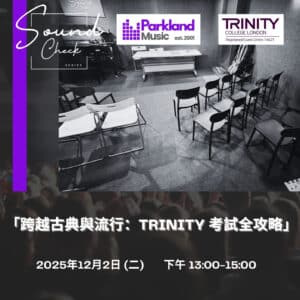
Parkland Soundcheck Series|Parkland X Trinity 《跨越古典與流行:Trinity 考試全攻略》工作坊

1213 曹貴子動感青年天地 Band Show 2025
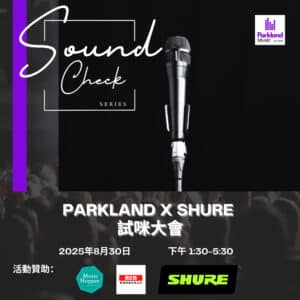
Parkland Soundcheck Series Vol.6|Parkland X Shure 試咪大會

Soundcheck Series《Keyboard⼿的表演腦 VS 製作腦》

0517 黄埔天地 師生 Band Show 2025

Soundcheck Series《創作靈魂工作坊》

Soundcheck Series《Live Ready 🥁鼓手備戰工作坊》

0118 Tin Shui Wai T Town Student Show 2025


