


Vocal Course | Learn Vocal Training
Parkland Music offers professional vocal courses, perfect for anyone interested in learning singing and formal vocal training. Our music academy features acclaimed vocal tutors on faculty.
Classical Vocal Course Introduction & Content Overview
In this video, we are delighted to feature captivating performance highlights from our classical vocal students. Watch our learners grow step-by-step from absolute beginners under the expert guidance of Parkland Music’s professional tutor team—progressing from foundational vocalization, range development, to smooth breath control, and ultimately delivering moving melodies with rich emotion on stage to showcase high-level vocal achievements.
Parkland Music is dedicated to providing comprehensive, professional vocal courses, encompassing Classical Vocal, Bel Canto, Musical Theatre, and exam/diploma preparation (such as ABRSM / Trinity). Whether you wish to cultivate a musical passion, enhance your vocal quality, expand your range, or prepare for music examinations and competitions, our tutors will tailor the perfect learning roadmap for you. Watch our students’ performance video now and experience the infinite possibilities of classical vocal music!
Classical Vocal Curriculum & Overview | Vocal Syllabus, Bel Canto Technique, Sight-Singing Theory & Classical/Art Song Training
- This course is specially designed for students looking to systematically master Classical Vocal technique, Opera, and Bel Canto. It comprehensively covers classical tone production, breath support, multi-language diction, music theory sight-singing, and ear training, with targeted focus on high-note techniques, passaggio transition, art song stylistic interpretation, and stage performance skills.
- 1. Foundational Vocal Mechanics & Introductory Bel Canto Training
- Vocal Fundamentals & Posture Alignment: Anatomical breakdown of vocal mechanics (vocal folds, resonating cavities, and soft palate), vocal warm-ups, correct singing posture (standing/seated), and relaxation techniques for the jaw, tongue, and larynx to build a rock-solid foundation in vocalization.
- Breath Control & Diaphragmatic Support: Dedicated focus on classical appoggio breath control, diaphragmatic strength conditioning, sustained note support (sostenuto), and dynamic breath regulation to build stable vocal stamina and volume modulation.
- Pitch Control & Range Expansion: Mastering precise intonation, classical vocalises (e.g., Vaccai, Concone), and range expansion to eliminate raspiness, pitch instability, and vocal strain.
- Resonance Placement & Tone Sculpting: Flexible coordination of Head Voice, Chest Voice, and Mask Resonance to shape a round, luminous, and carrying classical tone.
- 2. Classical Repertoire & Multi-Language Diction Practice
- Classic Repertoire & Exam Preparation: Hands-on training covering Baroque, Classical, Romantic, and Contemporary opera arias, art songs, and complete syllabus preparation for ABRSM / Trinity grade examinations and performance diplomas.
- Multi-Language Diction Training: Specialized pronunciation and articulation guidance for key classical vocal languages, including Italian, German Lieder, French Chansons, Latin, and English.
- Music Theory & Sight-Singing: Accelerating sheet music reading proficiency with comprehensive sight-singing, interval ear training, time signatures, tempo markings, and dynamic/expressive notations.
- Repertoire Analysis & Stylistic Interpretation: In-depth exploration of operatic storylines, poetic context, harmonic structures, and stylistic expression logic.
- 3. Advanced Vocal Techniques & Stage Performance
- Advanced Techniques & High-Note Mastery: Detailed execution of passaggio transitions, coloratura passages, rapid runs, trills, legato phrasing, and messa di voce (crescendo and decrescendo on a sustained note).
- Ear Training & Harmonic Perception: Developing acute auditory sensitivity, sight-singing ear training, and duet/ensemble harmony singing to enhance responsiveness to subtle timbre shifts and piano/orchestra accompaniment.
- Operatic Characterization & Stage Presence: Dramatic character analysis, stage presence, body language, and musical phrasing to transform vocal technique into compelling stage performances.
- 4. Vocal Care & Efficient Self-Practice Strategies
- Vocal Hygiene & Warm-Up Knowledge: Essential vocal health routines, daily care strategies, vocal fatigue prevention, and rapid warm-up techniques.
- Efficient Self-Practice Secrets: Mastering scientific, systematic, and time-efficient practice routines paired with piano accompaniment tracks for steady progress at home.
Who Is Suitable for Our Classical Vocal Course?
Whether you are a complete beginner with no prior experience in reading sheet music, or a music lover captivated by classical vocals, operatic arias, or Bel Canto, our professional tutors will tailor a dedicated learning pace for you. Progress seamlessly from proper singing posture, abdominal/thoracic breathing, and vocal warm-ups to staff notation sight-singing—effortlessly singing your very first moving piece.
If you already have a vocal foundation and wish to make breakthroughs in passaggio transitions, high-note support, coloratura techniques, multi-language diction (Italian, German, French), or art song stylistic interpretation, our tutors will refine your tonal quality and stage presence. We fully support you in obtaining international vocal diplomas, excelling in singing competitions, or performing as a featured soloist in choirs and operatic productions.
Classical vocal training and singing movement serve as an exceptional pathway for nurturing musical literacy, rhythm, and healthy vocal habits in early childhood. Tutors utilize engaging, patient, and game-based teaching methods—combining foundational vocalization, music movement, children’s choral repertoire, and ear training—to establish proper, strain-free vocal techniques from a young age, while developing precise pitch discrimination, acute auditory skills, and stage presence.
Utilizing diaphragmatic support and full-body resonance, classical vocal training not only relaxes deep-seated muscles and relieves work stress, but also improves everyday speaking tone and breath fluency. We offer highly flexible scheduling and make-up lesson policies, allowing busy professionals the freedom to choose their favorite classical art songs, sacred music, or iconic opera repertoire, while enjoying the mind-body nourishment of vocal music in a stress-free environment.
Classical Vocal Learning Guide: From Bel Canto Warm-Ups and Exam Pathways to Smoothly Performing Your First Classical/Art Song
What should beginners do if high notes feel unreachable or the throat feels tight and constricted? How can one sing Bel Canto effortlessly?
Muscle Relaxation & Building Diaphragmatic Support: Throat tightness, vocal fatigue, or pitch instability are common challenges for beginners. With consistent practice and mastering thoracic-abdominal breathing to establish solid breath support (Appoggio), you can relax the larynx and jaw, gradually eliminating vocal strain and inflammation.
Finding Head & Mask Resonance Placement: Ensure the jaw, tongue, and soft palate remain relaxed and lifted during vocalization. Guiding the airstream into proper Head Voice and Mask Resonance allows you to achieve a round, luminous, and carrying classical timbre with minimal effort.
Seamlessly Navigating the Passaggio (Vocal Bridge): Forcing high notes with brute force places severe strain on the vocal folds. We recommend working one-on-one with a professional Parkland Music classical vocal tutor to refine your vocal bridge using targeted vocalises, enabling seamless transitions across low, middle, and high registers.
How long does it take a beginner to sing a complete classical piece?
Lessons 1–2: Master correct posture, thoracic-abdominal breathing, foundational warm-up exercises, basic staff notation sight-singing, and vocal scales.
Around 1 Month (4 Lessons): Master foundational head voice resonance, basic Italian/English diction mechanics, and fundamental dynamic control (dynamics). With daily practice, you can fluently and confidently perform your first classical introductory piece or sacred song (e.g., Caro Mio Ben or Amazing Grace).
3–6 Months: Tackle smooth passaggio transitions, sustained breath support (sostenuto), legato phrasing, and musically rich art songs or operatic arias.
Practice Tips for Efficient Self-Study
The “Little and Often” Principle: Dedicating 15–30 minutes daily to focused practice yields far greater vocal muscle memory and progress than marathon weekly singing sessions that cause vocal fatigue.
Master Scientific & Efficient Warm-Ups: Always spend 5–10 minutes warming up before singing. Use lip trills, humming, or Vaccai vocalises to relax the vocal folds and activate resonance and soft palate elevation, effectively preventing throat constriction while expanding your register.
Utilize Recording & Piano/Metronome Training: Always practice alongside piano accompaniment or a metronome to adhere strictly to classical rhythms and tempo markings. Record your singing with your smartphone to listen back critically—this helps correct subtle intonation errors and timing issues while cultivating acute inner hearing.
Professional Classical Vocal Faculty | Prestigious Academy Qualifications & Extensive Stage/Opera House Experience
Parkland Music boasts a top-tier classical vocal faculty in Hong Kong. Our team members are graduates of world-renowned music conservatories (such as the Royal Academy of Music, The Hong Kong Academy for Performing Arts, the Department of Music at Hong Kong Baptist University, and Berklee College of Music), holding Grade 8 or higher professional qualifications (such as ABRSM / Trinity Grade 8 Vocal, DipABRSM / ATCL / LTCL / FTCL Vocal Performance Diplomas).
Our vocal tutors possess extensive one-on-one teaching experience and are actively performing as opera soloists, classical concert vocalists, recitalists, operatic production leads, masterclass clinicians, professional choir members, and recording studio session vocalists. Tutors tailor the most systematic, efficient, and artistically deep classical vocal curriculum based on each student’s vocal timbre, vocal development, linguistic background (Italian, German, French, English, Latin), musical preferences (Classical, Opera, Bel Canto, Art Songs, Sacred Music), and learning goals.
Classical Vocal Course Fees | How Much Does it Cost to Learn Classical Singing in Hong Kong?
2026 Course Tuition Fees for New Students (Individual Lessons)
| 級別 | 30分鐘 | 45分鐘 | 60分鐘 |
|---|---|---|---|
| 初級 (Pre-Grade) | $185 | $243 | $302 |
| 一級 (Grade 1) | $194 | $252 | $311 |
| 二級 (Grade 2) | $203 | $261 | $320 |
| 三級 (Grade 3) | $216 | $279 | $347 |
| 四級 (Grade 4) | / | $293 | $356 |
| 五級 (Grade 5) | / | $311 | $383 |
| 六級 (Grade 6) | / | $320 | $392 |
| 七級 (Grade 7) | / | $338 | $419 |
| 八級 (Grade 8) | / | $356 | $446 |
*以上價錢均為九折後之優惠價格。
Student Testimonials | Is Parkland Music Good? The Top Choice for Classical Vocal Lessons in Hong Kong
Want to know if Parkland Music’s Classical Vocal Course is right for you? Listen to first-hand student reviews and vocal performance showcases! With multiple branches across Hong Kong, Parkland Music has earned highly recommended reviews from tens of thousands of students. Our star faculty is renowned for being attentive, patient, and professional—tailoring custom lesson plans according to each student’s musical preferences (Opera Arias, Multi-Language Art Songs, Sacred Music, Classical Bel Canto, Musical Theatre, etc.) and individual learning pace. Whether you are a complete beginner looking to cultivate a passion for music, seeking early music enlightenment for young children (aged 2.5 and above), or aiming to prepare for ABRSM / Trinity classical vocal grade exams and performance diplomas, Parkland Music provides the most professional, stress-free learning environment!
Patient Guidance from Professional Tutors: Concepts are broken down clearly and made easy to digest, making lessons particularly suitable for young children and complete beginners. Tutors guide you step-by-step—from standard vocal warm-ups, thoracic-abdominal breathing, and diaphragmatic support (Appoggio), to staff notation sight-singing and pitch control—building a solid Bel Canto foundation.
Flexible Lesson Schedules & Arrangements: Flexible scheduling and make-up lesson policies make it effortless for parents, working professionals, and students to coordinate their daily practice and singing routines.
Equal Emphasis on Technique & Practical Music Theory: Beyond mastering head voice and mask resonance, passaggio transitions, and legato technique, the curriculum thoroughly covers professional sight-singing, classical music theory, ear training, and standard diction mechanics across multiple languages (Italian, German, French, and English).
Stage Performance & Ensemble Opportunities: We regularly host student recitals, classical vocal showcases, choral/ensemble experiences, and grand concert hall performances, helping students build stage confidence while accumulating rich, live performance experience.
Abundant Stage Performance Opportunities | Student Recitals, Public Performances & Vocal Ensemble Experience
Parkland Music believes that music should not remain confined to practice rooms and vocal studios—the stage is the ultimate platform to showcase vocal charm and artistic expression! We offer a diverse array of performance platforms for vocal students of all levels, allowing you to build confidence, gain live experience, and express your artistic attitude on real stages.
Parkland Music’s Four Dedicated Performance Platforms for Students
Regular Student Recitals: Quarterly internal and public vocal recitals designed for beginners and advanced students to exchange ideas in a warm, professional atmosphere while showcasing solo, vocal ensemble, and piano-accompanied performances.
Grand Concert Hall Performances & Public Showcases: Opportunities to perform at major concert halls, shopping mall tours, and as guest soloists in grand concerts. Experience the thrill of singing Bel Canto under the spotlight accompanied by professional pianists, chamber ensembles, or full orchestras.
Music Competitions & Exam Certifications: Coaching and recommendations for outstanding students to enter local and international classical vocal competitions (such as the Hong Kong Schools Music Festival – HKSMA), competing for awards while pursuing recognized ABRSM and Trinity classical vocal grades and performance diplomas.
Vocal Ensemble & Choral Singing Experience: Facilitating duets, trios, chamber vocal ensembles, and choral projects for students to perform solo or harmony parts, experiencing the joy of collaborative vocal blending, multi-part harmony stacking, and creative vocal ensemble arrangements alongside fellow singers.
98% Exam Pass Rate | Letting Results Speak for Themselves
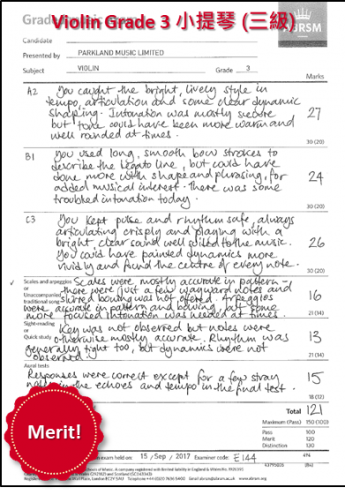
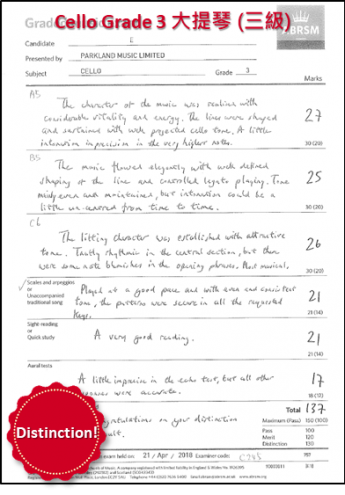
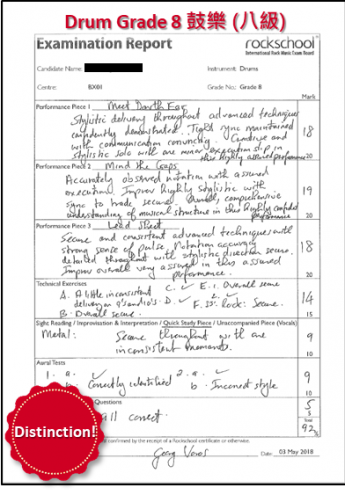
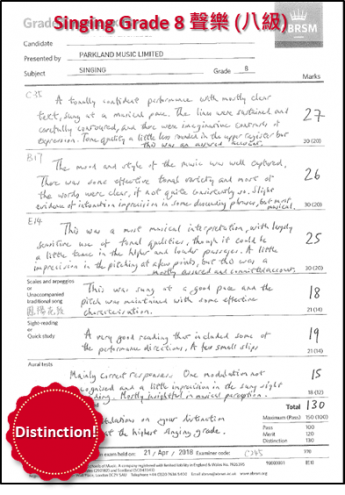
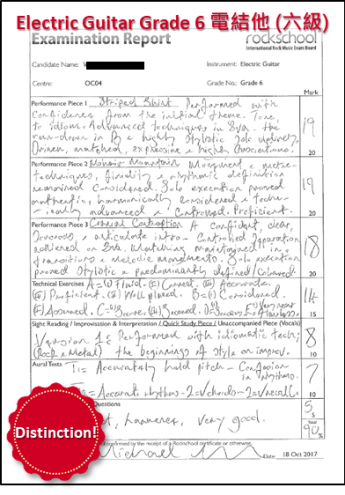
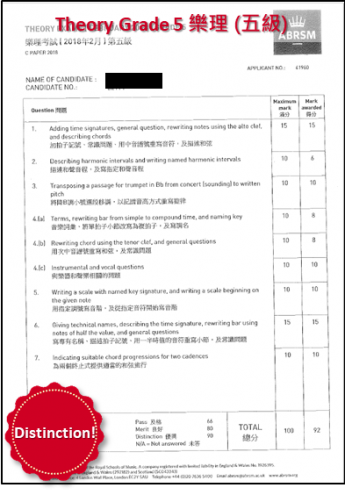
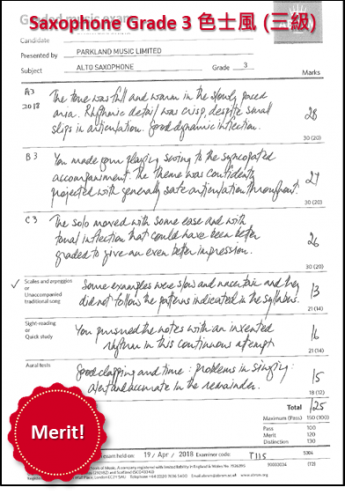
Upholding the educational philosophy of “driving learning through passion,” Parkland Music is dedicated to providing the most professional and systematic vocal training for every student. In international music examinations over the years—including ABRSM (Associated Board of the Royal Schools of Music) and Trinity College London classical vocal exams—our students have demonstrated exceptional achievements, attaining an exam pass rate of up to 98%. In a recent ABRSM exam session, nearly 88% of our candidates achieved Merit or Distinction honors!
Among them, outstanding Parkland students have progressed from absolute beginners to Grade 8 level in as little as 3 years! Our faculty tailors instruction to each student’s unique strengths, helping them unlock their potential, successfully earn classical vocal grade certifications and performance diplomas, and step forward with confidence on their professional musical journey to fulfill their dreams.

Inquire About Classical Vocal Courses Now
Fill out the form below to receive a $50 cash rebate upon enrollment (Limited monthly quota available on a first-come, first-served basis, while stocks last).
Whether you are an absolute beginner, an intermediate learner, or an advanced vocalist, our tutors will tailor a dedicated curriculum aligned with your musical goals. You can even choose your favorite repertoire and musical styles as your learning materials!
Classical Vocal Course FAQ
Yes, absolutely.
Our classical vocal course is custom-tailored for students of all proficiency levels, requiring no prior experience in reading sheet music or formal vocal training. Professional tutors guide you step-by-step from scratch—starting with correct singing posture, thoracic-abdominal breathing, vocal warm-ups, and head voice resonance—to help you overcome throat tension, pitch instability, and vocal strain.
Lessons are highly flexible.
We offer a wide range of timeslots (including weekday evenings and weekends) to accommodate parents, students, and busy working professionals. Our comprehensive make-up lesson policy allows you to reschedule with advance notice, ensuring your learning progress stays seamlessly on track.
No equipment is required.
All Parkland Music studios are equipped with professional pianos, and tutors provide live piano accompaniment and vocal adjustments during every lesson. Simply bring your enthusiasm for singing! Tutors will also provide accompaniment tracks and guided exercise materials for home practice.
Our faculty holds top-tier conservatory degrees and extensive performance experience.
Our vocal tutors graduated from renowned music institutions (such as the Royal Academy of Music, The Hong Kong Academy for Performing Arts, and Hong Kong Baptist University), holding Grade 8 or higher level (e.g., ABRSM / Trinity Grade 8, DipABRSM / ATCL / LTCL / FTCL Vocal Performance Diplomas). Tutors are also active operatic soloists, classical concert vocalists, and masterclass clinicians.
Please contact us to enquire about trial lessons.
It is highly recommended and serves as the ultimate foundation for all forms of singing.
Many assume classical opera or Bel Canto has a steep entry barrier, but classical singing actually emphasizes healthy, strain-free vocal mechanics (Appoggio breath support and full-body resonance). Learning to utilize your natural resonating cavities allows you to produce a rich tone effortlessly while protecting your vocal folds from damage.
Children can begin early music enlightenment and vocal exploration as early as ages 2.5 to 5.
For young children, tutors utilize engaging, patient, and play-based teaching methods—combining foundational vocalization, music movement, children’s choral repertoire, and ear training—to instill healthy, strain-free singing habits from an early age while developing precise pitch discrimination and stage confidence.
Vocal Mechanics & Resonance: Classical vocal (Bel Canto) emphasizes thoracic-abdominal breath support, elevated soft palate, and head/mask resonance to achieve a round,連貫 (legato), and carrying acoustic tone. Pop singing more frequently employs conversational voice placement, mixed voice, chest resonance, and microphone amplification.
Repertoire & Diction: Classical vocal encompasses Baroque, Classical, and Romantic opera arias, art songs, and sacred music across languages including Italian, German, French, Latin, and English, whereas pop singing focuses on Cantonese, Mandarin, Western, and Asian pop songs.
It is never too late, and adults have unique advantages in learning classical vocal!
Engaging in classical singing utilizing diaphragmatic support and body resonance helps release deep muscular tension, relieves work stress, and improves everyday speaking projection. Adult learners possess strong analytical skills and artistic perception, allowing them to deeply appreciate the poetic context and emotional depth of art songs and operatic works.
Yes.
Our curriculum fully prepares students for ABRSM (Associated Board of the Royal Schools of Music) and Trinity College London classical vocal examinations (Grades 1–8) as well as ARSM / DipABRSM / ATCL performance diplomas, helping you earn internationally recognized credentials.
Parkland Music operates multiple branches across Hong Kong, earning praised recommendations from tens of thousands of students and maintaining an international music exam pass rate of 98%. Our faculty is widely recognized for being attentive, patient, and professional.
Tuition varies by grade level (Pre-Grade to Grade 8) and lesson duration (30 mins, 45 mins, 60 mins). Individual lesson rates start from $185 per 30-minute session for Pre-Grade, up to $302 per 60-minute session. Feel free to contact any Parkland Music branch directly for current fee details and enrollment offers!
4 Key Advantages of Choosing Parkland Music:
Star-Studded Faculty: Graduates from top conservatories with rich opera solo, classical concert, and masterclass performance backgrounds.
Convenient Branch Locations: Conveniently located across Hong Kong with flexible scheduling and fully equipped piano studios (no need to bring instruments).
Abundant Performance Opportunities: Regular student recitals, grand concert hall solo showcases, vocal ensemble/choral experiences, and competition entries to build stage confidence.
Comprehensive Exam Support: Recognized ABRSM and Trinity exam coaching to guide you toward high-scoring performance diplomas.
Latest Articles
View allActivities
View all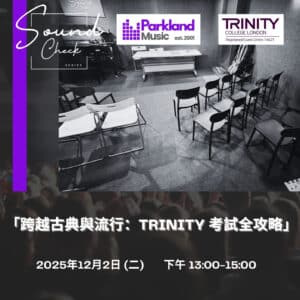
Parkland Soundcheck Series|Parkland X Trinity 《跨越古典與流行:Trinity 考試全攻略》工作坊

1213 曹貴子動感青年天地 Band Show 2025

Parkland Soundcheck Series Vol.6|Parkland X Shure 試咪大會

Soundcheck Series《Keyboard⼿的表演腦 VS 製作腦》

0517 黄埔天地 師生 Band Show 2025

Soundcheck Series《創作靈魂工作坊》

Soundcheck Series《Live Ready 🥁鼓手備戰工作坊》

0118 Tin Shui Wai T Town Student Show 2025


